


The project
Summary of the project titled “Solar Energy Enhancement in Cross-border Region” (abbreviated as CB Energy, ID: ROHU00099), implemented within the framework of the Interreg VI-A Romania–Hungary Programme
Project partners:
|
1 |
Comuna Lugașu de Jos |
ROMÂNIA |
LP1 |
|
2 |
Komádi Town Municipality |
HUNGARY |
PP2 |
Komádi is located in the eastern part of Hajdú-Bihar County, near the Romanian border, along the Sebes-Körös River. Geographically, the town lies on the northern edge of the Kis-Sárrét region, adjacent to the Bihari Plain. Its surroundings are flat, flood-prone areas shaped by the river and former marshlands. Administratively, several outer districts belong to Komádi, including Mihálytelep, Külsőiszap, Gyártelep, and Dobaipuszta.
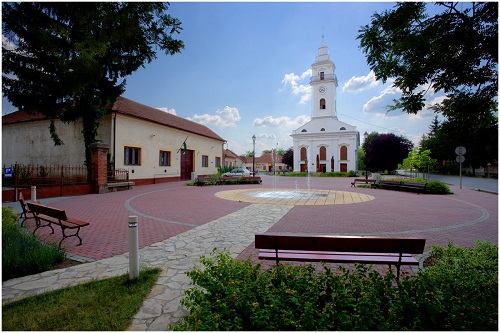
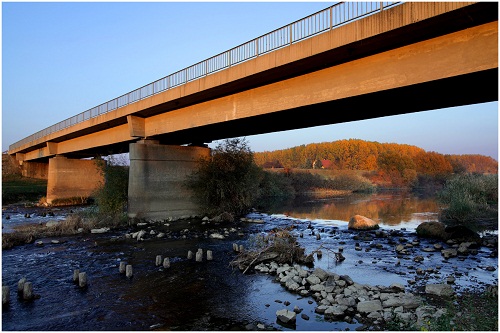
The first written mention of the settlement dates back to 1091, and in 1214 it appears as “Comad” in the Várad Register. During the Middle Ages, it was a Hungarian-inhabited village that was destroyed during the Mongol invasion but was soon rebuilt. In 1605, Prince István Bocskai granted it the status of a free village, and in 1630 it became a market town. In the 18th and 19th centuries, epidemics, droughts, and wars decimated the population, yet Komádi always managed to recover. The Reformed Church was built in 1842, and around fifty locals took part in the Hungarian Revolution and War of Independence of 1848–49.
In the second half of the 19th century, the construction of the railway brought significant development. In the 20th century, the hemp factory became the center of the local economy: it also produced chipboards and employed hundreds of people in the 1980s. After its closure, a sewing workshop was established in 1991, providing jobs for many young people with modern equipment.
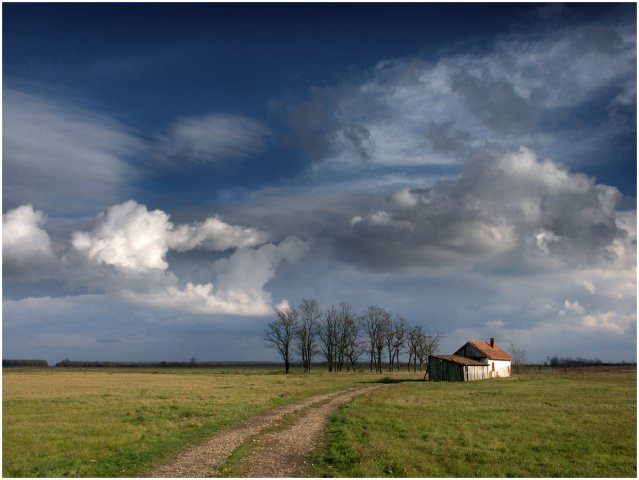
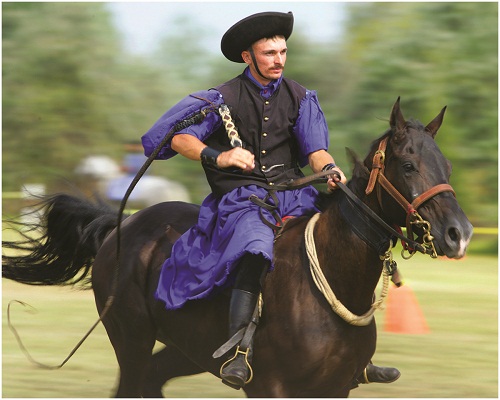
Komádi obtained town status in 2001. Today it is a calm, small-town community where the Sebes-Körös River, the proximity of nature, and a rich historical past combine to form its unique character. The perseverance and communal spirit of the people of Komádi have been defining traits of the Bihari region for centuries.
Lugașu de Jos (Hungarian: Alsólugas) is situated in the central part of Bihor County, on the right bank of the Sebes-Körös River, approximately 32 kilometers east of Oradea and 5 kilometers west of Aleșd. It is one of the picturesque settlements of the Partium region, lying among the gentle hills of the river valley along the E60 main road. The village is the administrative center of Lugașu de Jos Commune.
Its history dates back to the Árpád era. The first known mention of the settlement appears between 1291 and 1294 under the name Lugas in a charter. It was already a significant settlement in the Middle Ages, mentioned in 1406 as Lugasd, in 1458 as Magyarlugas, in 1808 as Alsó-Lugos, and in 1913 as Alsólugos. During the Ottoman occupation, its Hungarian population perished, and after 1715 Romanian families settled in the area. At the turn of the 18th and 19th centuries, the estate developed under the ownership of the Batthyány family and later the Zichy family.
One of the village’s most notable architectural landmarks is the Zichy Mansion, built in the 19th century by Count Domokos Zichy. The elegant neoclassical building was renovated in 2001 with European Union funding and now functions as a hotel, preserving the historical charm of the region.
Throughout its history, Lugașu de Jos has faced several natural disasters — for example, the 1873 flood of the Huta stream caused severe destruction, destroying houses and claiming lives. At the beginning of the 20th century, the settlement already had more than a thousand inhabitants, mostly Romanians, with significant Hungarian and Slovak minorities. Even in the 21st century, it remains a multiethnic community: according to the 2011 census, more than half of the population is Romanian, one quarter Hungarian, with smaller Slovak and Roma communities. The religious landscape is equally diverse, including Orthodox, Reformed, Pentecostal, Roman Catholic, and Baptist denominations.
The local economy is traditionally based on agriculture, though many residents work in nearby towns — mainly Aleșd and Oradea. The commune also hosts an Italian-owned mushroom and fruit processing plant, which provides an important source of livelihood for the area.
Lugașu de Jos has remarkable natural surroundings: an artificial lake on the Sebes-Körös and the small 0.4-hectare “Gruiul Pietrii” nature reserve are popular excursion spots. The village’s Orthodox and Greek Catholic churches, as well as the park surrounding the mansion, radiate tranquility and harmonize with the peaceful landscape of the river valley.
Lugașu de Jos continues to preserve the traditions of the Bihor region — the coexistence of multiple nationalities and faiths, the closeness of nature, and the deep historical roots all contribute to the village’s unique, calm, and welcoming character.
Programme Priority
P1 – Cooperation for a greener and more resilient cross-border area between Romania and Hungary
Specific Objective
RS02.2 – Promoting renewable energy in line with Directive (EU) 2018/2001 on renewable energy, including the sustainability criteria defined therein
Located in the heart of Europe, the regions of Lugașu de Jos and Komádi are the focus of a project aimed at transforming the energy landscape. This initiative seeks to bridge the gap between urban and rural energy use, focusing on harnessing the power of the sun — the most abundant renewable energy source.
Like many areas across the world, this region faces the challenge of uneven renewable energy utilization, as highlighted by the European Court of Auditors’ framework “Renewable Energy for Sustainable Rural Development.” While urban centers have seen an increase in green energy initiatives, rural areas often lag behind. This imbalance affects not only the environment but also hinders rural economic growth and self-sufficiency. Our project addresses this disparity, aiming to bring sustainable energy solutions to the heart of rural communities.
The main goal of the project is to promote renewable energy in accordance with the EU Renewable Energy Directive 2018/2001. By installing photovoltaic systems and fostering cross-border cooperation, the project aims to increase rural adoption of green energy, leading to a 25% rise in the positive perception and willingness to adopt photovoltaic energy systems as a renewable energy source within the region.
The expected outcomes are twofold: a tangible reduction in carbon footprint and the empowerment of communities that directly experience the benefits of sustainable energy.
The project represents a joint response to shared territorial challenges, as it:
Engages various stakeholders, residents, businesses, educational institutions, and local authorities through five workshops, three stakeholder meetings, and three training sessions (WP1), raising awareness and understanding of solar energy among educators, local leaders, entrepreneurs, and citizens.
- Produces a jointly developed solar energy strategy (WP2) incorporating regional knowledge and advocates for the transition to sustainable energy.
- Encourages long-term cooperation (WP3) between LP1 and PP2 through formalized agreements such as a Memorandum of Understanding and a post-project cooperation agreement, fostering shared responsibility for renewable energy development.
- Implements solar panel installations at both partners’ sites (WP4), representing cooperation and community engagement through carefully planned, suitable, and verified systems — symbols of commitment to sustainability and collective involvement.
Beneficiaries range from local residents — who will directly experience reduced energy costs — to municipalities and businesses, which will benefit from more sustainable and self-sufficient communities.
Project Budget
|
1 – Comuna Lugașu de Jos |
LP1 |
ROMÂNIA |
€ 576.710,82 |
|
2 – Komádi Városi Önkormányzat |
PP2 |
HUNGARY |
€ 399.695,94 |
|
Összesen |
€ 976.406,76 |
Our approach is holistic — combining technical implementation with community engagement and education. By fostering collaboration between Lugașu de Jos and Komádi, we ensure mutual learning, resource optimization, and shared growth. A cross-border approach is essential, as energy challenges do not respect borders. Joint solutions not only pool resources but also strengthen shared responsibility and community spirit.
What distinguishes our project is its emphasis on community: while many initiatives focus solely on the technical aspects of energy deployment, we go deeper. We recognize the importance of community involvement, education, and feedback. By integrating these elements, our installations become more than just physical structures — they become symbols of empowerment and cooperation. Moreover, our partnership offers a unique perspective, ensuring that our approach is both technically sound and environmentally conscious.
In essence, our project is more than an energy initiative — it is a step toward a brighter, greener, and more collaborative future. Through joint effort, shared vision, and community participation, we aim to revitalize the region.
“The content of this summary does not necessarily reflect the official position of the European Union.”
Official programme website: www.interreg-rohu.eu